
7 South Asian films At The Sydney Film Festival 2026 You Shouldn't Miss
- Staff Writer
- 2 days ago
- 4 min read
The 73rd Sydney Film Festival runs 3–14 June 2026, and if you know where to look in its 200-plus film program, there's a genuinely strong run of South Asian cinema buried in it. Not Bollywood blockbusters, something more interesting than that.
Debut features, Sundance openers, Venice prize winners, and the first-ever Rohingya-language film.
Across seven films spanning India, Pakistan, Bangladesh, Afghanistan and the Tibetan diaspora, the festival has quietly assembled one of its more substantial South Asian slates in recent times.
Here's a film-by-film guide to what's on and what to expect.
Don't Tell Mother | India
This is the one closest to home, in more ways than one. Don't Tell Mother is the debut feature from Melbourne-based filmmaker Anoop Lokkur, and the story behind how it got made is almost as good as the film itself.
Lokkur told Variety that he kept the film a secret of all from his own mother - that he was using his saved house deposit money to fund the film.
The film is a semi-autobiographical look at life in Bangalore in the 1990s, seen mostly through the eyes of nine-year-old Aakash as he navigates the transition from childhood innocence to the ambient pressures of the world around him.
The film premiered at the Busan International Film Festival, where Lokkur said his parents finally saw it and loved it.
Hanging By A Wire | Pakistan
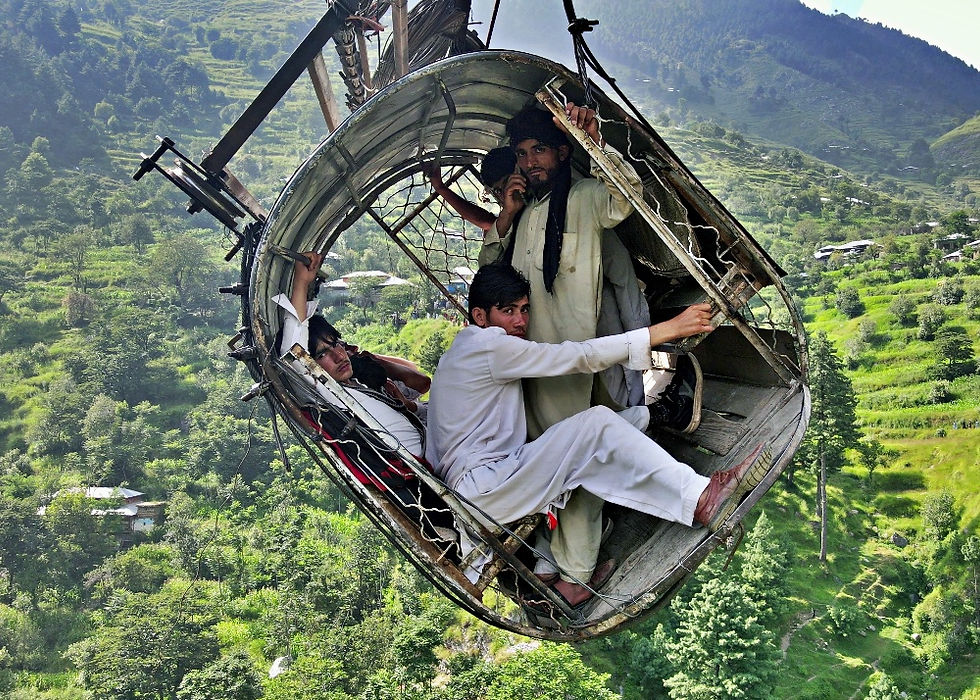
On the morning of August 22, 2023, eight people, most of them teenagers heading to school, climbed into a makeshift cable car in the remote mountains of Pakistan's Khyber-Pakhtunkhwa province. Two of the three cables snapped, leaving them dangling in the air for hours as the world watched.
Director Mohammed Ali Naqvi was watching too, along with everyone else. What followed was a rescue operation that involved army helicopters, makeshift ziplines, and, critically, a community of bystanders with smartphones who refused to stay silent.
"TikTok changed that game," Naqvi has said. "They knew: Don't call the police. Post these stories on Instagram."
Drawing on footage recorded by onlookers, drone imagery and cinematic reconstructions, Naqvi crafts a documentary that plays like an adrenaline-fuelled thriller while revealing uncomfortable truths about class, inequality and why proper infrastructure doesn't exist in places like Battagram in the first place.
Naqvi has said the film was a conscious break from the kind of work that's often expected from South Asian filmmakers — films about trauma, abuse, oppression.
The film opened the Sundance Film Festival this year.
Master | Bangladesh
Master is Rezwan Shahriar Sumit's Rotterdam award-winning political drama about a man who runs for local office with genuine intentions and wins, and then has to figure out what to do with the power that brings.
Jahir is a schoolteacher whose populist campaign on education, women's rights and public reform leads him to an unexpected victory as a first-time mayoral candidate. His ideals are then tested when a controversial development proposal threatens to displace local communities, pulling him into a struggle between public duty and political pressure.
Bangladesh has been producing increasingly confident realist cinema over the past decade, and this sits comfortably in that tradition.
The Cycle of Love | India
The Cycle of Love documents the journey of PK Mahanandia, a Delhi street artist who in 1977 cycled 6,000 miles from India to Sweden to reunite with the woman he loved.
The film won the Artemis Rising Foundation Award at the Hamptons Film Festival and the Audience Award for Best Documentary at Middleburg, which tells you something about how it lands with crowds.
Priyanka Chopra Jonas came on as producer. Directed by Oscar-winner Orlando von Einsiedel, it uses present-day interviews with PK and the woman he rode across continents to find, alongside reconstructions of the journey itself.
Lost Land | Rohingya
This is probably the most significant film in the South Asian grouping, for reasons that go beyond cinema.
Lost Land is the first-ever feature film made in the Rohingya language. It follows four-year-old Shafi and his nine-year-old sister Somira as they make a perilous journey from a refugee camp in Bangladesh to Malaysia, hoping to reach their scattered family.
The film features over 200 Rohingya people, including the siblings who play the leads — most of whom had personally experienced journeys similar to the one depicted on screen.
Co-producer Sujauddin Karimuddin, a Rohingya human rights activist, described the film as "an act of language preservation, resistance, remembrance, and truth-telling" at a time when genocidal forces are actively working to erase the Rohingya language, music and people.
The film won the Special Jury Prize at Venice.
No Good Men | Afghanistan
Afghanistan is represented through No Good Men by Shahrbanoo Sadat. The film is a political romantic comedy about a camerawoman disillusioned with love who finds herself unexpectedly drawn to the country's leading journalist.
100 Sunset | Tibetan diaspora
In this Toronto Film Festival prize-winner, introverted newcomer Kunsel arrives in the Parkdale neighbourhood of Toronto and begins quietly observing, and occasionally stealing from, her fellow residents at her apartment building, 100 Sunset.
She becomes drawn to Passang, a neighbour trapped in a difficult marriage, and the film builds around both women finding paths that might lead somewhere else.
The backdrop is the Dukuti system, an informal community credit arrangement, where members contribute monthly and one household takes the collective pot. Non-professional actors paint a portrait of a Tibetan community living far from their land but deeply embedded in their own customs and traditions.
Full program at sff.org.au.


Comments