
Australia Will Now Fund 20 Asian Languages In Schools Including Hindi, Tamil and Punjabi. Here's What That Means
- Staff Writer
- 10 hours ago
- 3 min read
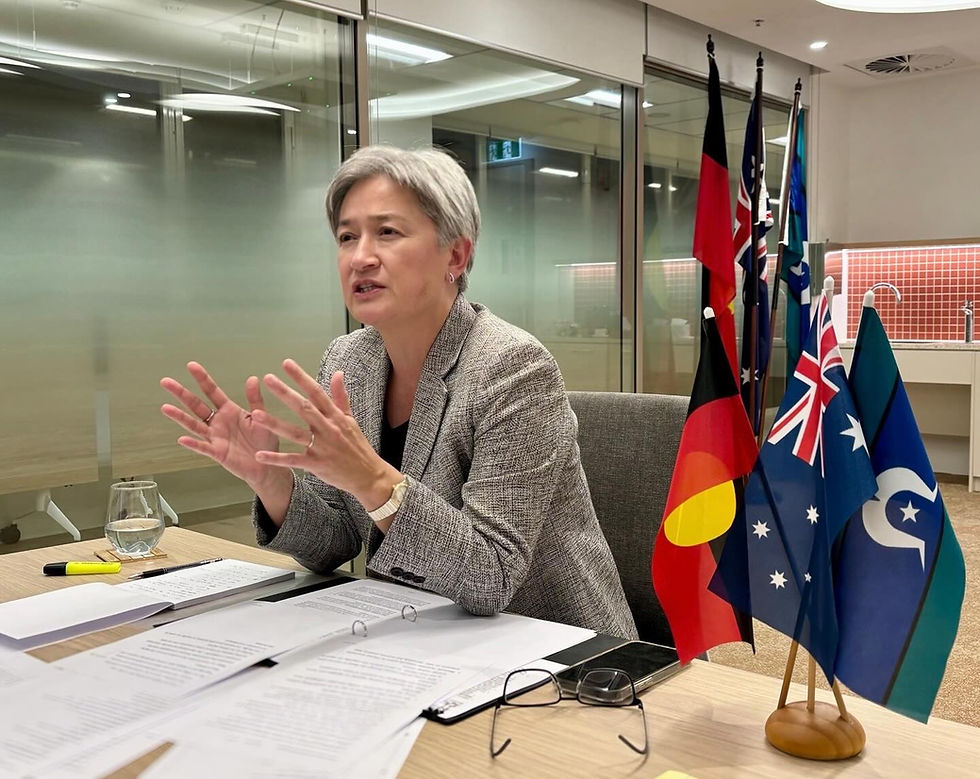
The Australian government will fund teaching of 20 Asian languages, including 10 South Asian languages, in Australian community language schools.
The Albanese government on Tuesday announced $2.5 million under a new Fluency in Asian Languages program, supporting nine organisations across Victoria, New South Wales and the Australian Capital Territory (ACT) to deliver language education to students in Years 7 to 12.
The South Asian languages covered by the funding are Bengali, Gujarati, Hindi, Malayalam, Nepali, Punjabi, Sinhalese, Tamil, Telugu and Urdu. The program also covers 10 other Asian languages - Mandarin, Japanese, Thai, Filipino, Indonesian, Vietnamese, Khmer, Burmese, Yue (Cantonese) and Korean, bringing the total to 20.
Wong Says Australians Will Benefit From Learning Asian Languages
Foreign Affairs Minister Penny Wong said the investment was about more than cultural heritage.
"Australia's interests demand we engage in the region more consistently and more deeply," Wong said. "When young Australians learn Asian languages, they can build the trust, relationships and capability to engage in our region more effectively."
Four universities — Macquarie, Sydney, Melbourne and the Australian National University — are among the nine grant recipients. Their projects are expected to produce curriculum and learning resources with national reach, not just local benefit.
A separate $5 million has been earmarked specifically to keep students enrolled in language programs all the way through to Year 12, targeting the persistent drop-off that happens once academic pressure builds in senior school.
Why This Matters To South Asian Communities In Australia

The numbers tell the story. The 2021 Census found that 5.6 million Australians — 22 per cent of the population — use a language other than English at home, up from 4.8 million in 2016.
Collectively, Australians speak over 400 languages, of which 167 are Aboriginal and Torres Strait Islander languages. South Asian languages feature prominently in that picture.
Punjabi recorded the largest increase of any language between the two censuses - up 80 per cent from 2016 - with over 239,000 people using it at home.
In 2025, India-born residents overtook England-born residents to become Australia's largest overseas-born population group, while the Nepal-born population more than doubled. The 2026 Census, expected later this year, is likely to show those numbers have grown further still.
Children growing up in migrant families have had to seek language education outside school hours, outside the curriculum, and largely outside any public investment.
Language Skills Are A National Asset, Says Minister
Australia's record on Asian language learning has not been good. University enrolments in Asian languages fell 30 per cent in the decade to 2022, and there are now fewer people studying Indonesian in Australia than there were under the Whitlam government — despite the population having doubled.
Australia ranks second last among 64 countries in the OECD's most recent survey of second language study among 15-year-olds.
Minister for Multicultural Affairs Anne Aly, who co-announced the program alongside Wong and Assistant Minister Julian Hill, was direct about what has been lost by undervaluing diaspora language skills for so long.
"Community language schools are central to multicultural Australia, giving young people the opportunity to stay connected to their heritage while gaining skills that will benefit them for life," she said. "Language skills are a national asset."
Hill pointed to the economic argument. "Australia's future prosperity depends on our ability to engage confidently with our region — the fastest-growing region in the world," he said. "Having more Australians capable of speaking the languages of our largest trading partners and neighbours is a huge benefit to our nation."
Tuesday's announcement is a step in that direction — though advocates say the job is far from done.
The government says it has invested $40.6 million in community language schools since 2023. Wong's framed it as providing Australians with more opportunities to succeed.
"This is all about giving the next generation of Australians the ability to succeed in the communities and region that will shape our nation's future."



Comments