
Australia Let This Indian Nurse In. Now It's Pushing The Family Out Because Her Son Has a Disability.
- Staff Writer
- 1 day ago
- 4 min read
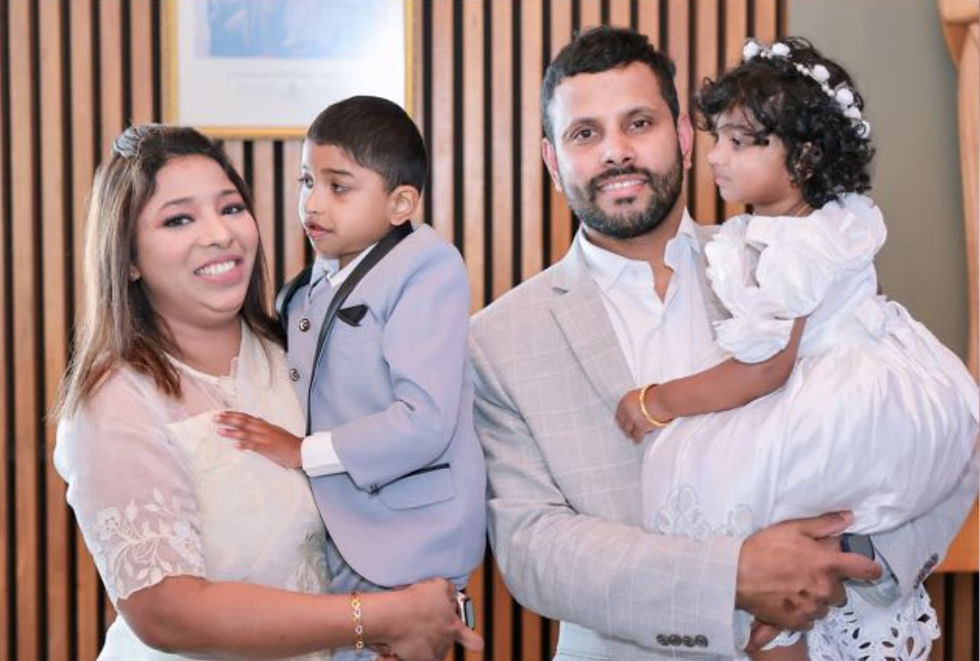
Christin Das works night shifts in one of the busiest emergency departments in regional Victoria, triaging patients when the system is at breaking point. Her husband Jineesh, a qualified chef, stays home in Bendigo caring for their children - Jaziel (6) and Hazel (2).
Jaziel, is slowly making progress — building skills, gaining confidence, responding to the support around him.
None of that, it seems, is enough.
The family, originally from India, has been refused permanent residency in Australia because Jaziel has developmental challenges. A Change.org petition launched in their name - with the family asking for a single thing: a fair chance to stay - has received over 1,600 signatures.
"We feel lost, with no clear path forward," the petition reads. "Our children are growing up here. This is their home."
Indian Nurse And Her Family Moved From Ireland To Australia
What makes the family's situation particularly difficult to square is how it began. Before coming to Australia, Christin, Jineesh, Jaziel, and their younger daughter Hazel, were settled in Ireland.
Christin said she had steady employment, the family had stability, and they had no particular reason to move.
When an Australian visa opportunity arose, they applied — and claimed they were fully transparent about Jaziel's condition from the start. The visa was granted. So they left Ireland, moved to Bendigo, and built a life.
Now, at the permanent residency stage, that same condition has become grounds for refusal.
"If our visa had been refused at that time, we would have continued our life in Ireland without any issue," the petition says. "But now, after building our life here, we are in a situation where we cannot stay in Australia, and we cannot return to the life we once had."
A Cruel Visa Rule That Discriminates

Under Australia's Migration Health Requirement, if a visa applicant or their dependent has a health condition or disability likely to incur costs above the Significant Cost Threshold — currently set at $86,000 — the visa can be refused.
The assessment is based on projected use of services over time, not on actual usage. It focuses exclusively on the perceived economic cost of the applicant's condition and the perceived burden this will place on public health and community resources.
Christin is a registered nurse staffing a regional emergency department in a state struggling with healthcare shortages. Jineesh is a qualified chef. Together, the petition argues, their tax contributions and community value more than offset any projected cost.
It's an argument other Australian migrant families have had to make before — repeatedly, and at enormous personal cost.
The same story, different names

In 2023, Aneesh Kollikkara and Krishna Aneesh, a telecommunications technician and a cybersecurity expert, were denied permanent residency in Perth because their ten-year-old son Aaryan has Down syndrome.
The government deemed him a financial burden despite the family saying he accessed no services. More than 28,000 people signed their petition before the immigration minister intervened.
Before that, a Bhutanese family living in regional Australia — where they had specifically relocated to help fill a labour shortage — faced deportation because their son Kinley had a hearing impairment that had only been diagnosed after the family arrived.
There have been others. A British family with a toddler born with cystic fibrosis was told his lifetime treatment costs were estimated at $1.3 million, and that the family could not stay permanently.
An Irish family in regional Victoria spent nearly a decade in Australia before being told their three-year-old son's health condition meant the family did not qualify for permanent residency.
Lily Lumintang, who arrived in Australia in 2009 from Indonesia and secured full-time employment with a construction company, launched her own petition after her son Jonathan — born in Australia with cerebral palsy — became a barrier to her family obtaining permanent status.
Following reports in the media and community outcry, the government intervened to grant these families permanent residnecy.
Labor Government Changes Rule... Partially
Changes to migration regulations now exempt children born and ordinarily resident in Australia from certain health-related criteria that would previously have made their families ineligible for a visa.
Jaziel was not born in Australia and the exemption does not apply in his family's case.
Critics argue the broader system remains discriminatory. It relies on opaque costing methods and standardised projections that disregard a family's proven ability to contribute — and that the emotional and financial toll on affected families is severe.
What Nurse Christin Das And Her Family Is Asking
The petition, started by Suresh Rajan — a disability advocate and former CEO of Epilepsy WA — is calling for ministerial intervention to allow the family to remain.
For Jaziel, the stakes are immediate.
His parents say the support he is receiving in Australia is working. The therapy, the schooling, the environment — it is helping him grow. They fear losing it would set him back in ways that are hard to recover from.
"Jaziel is a loving and gentle child who is trying his best every day," the petition says. "Taking that away from him would deeply affect his future."
Christin Das is spending her shifts keeping strangers alive in a regional hospital that needs her. She is asking, in return, to be allowed to raise her son in the country that recruited her to do it.
"As parents, all we want is a fair chance for our son — to grow, to learn, and to live with dignity. We are hardworking people who contribute to the community and ask only for the opportunity to stay and continue building our lives here," the family said.


Comments